
Remembering Churchill in Callaway County: A Legacy That Still Resonates
Each year, visitors from across the country—and around the world—make their way to Fulton, Missouri for a story that began with a single speech, but never truly ended.
As the anniversary of Sir Winston Churchill’s historic visit approaches, Callaway County pauses to reflect on the moment that placed this small Midwestern community on the global stage—and the legacy that continues to shape it today.
When the World Turned Its Eyes to Fulton
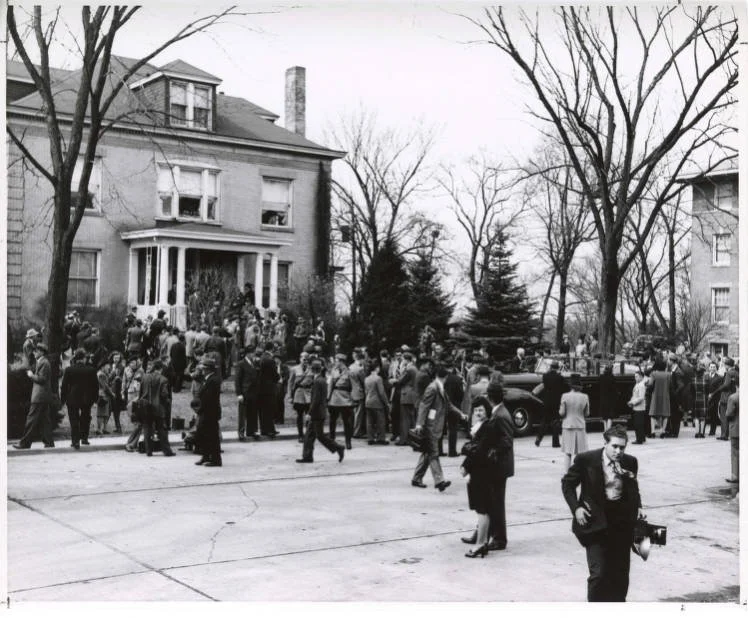
Photo from The State Historical Society of Missouri - Crowd on Westminster Campus
On March 5, 1946, Sir Winston Churchill delivered what would become one of the most famous speeches of the 20th century on the campus of Westminster College.
It was here that he spoke the words that would echo across decades:
“An iron curtain has descended across the Continent.”
The address, formally titled “The Sinews of Peace,” is now widely remembered as the Iron Curtain speech—a warning about the growing divide between Eastern and Western Europe after World War II.
Standing beside U.S. President Harry S. Truman, Churchill delivered words that helped frame the geopolitical tensions that would define the Cold War. What began as a lecture at a small college quickly became a moment recognized around the world.
For visitors today, standing on the same campus where that speech took place offers a powerful reminder of how global history can unfold in unexpected places.
How Churchill Came to Fulton
Churchill’s visit did not happen by chance.
In the months after World War II, Westminster College President Franc McCluer believed the college should host a speaker who could address the future of the postwar world. Through connections with Major General Harry Vaughan, a Westminster alumnus serving in President Truman’s administration, an invitation was extended to Churchill.
Truman agreed to attend and introduce the former British Prime Minister. Churchill accepted the invitation—and suddenly a small Missouri town found itself preparing to welcome two of the most influential leaders of the era.
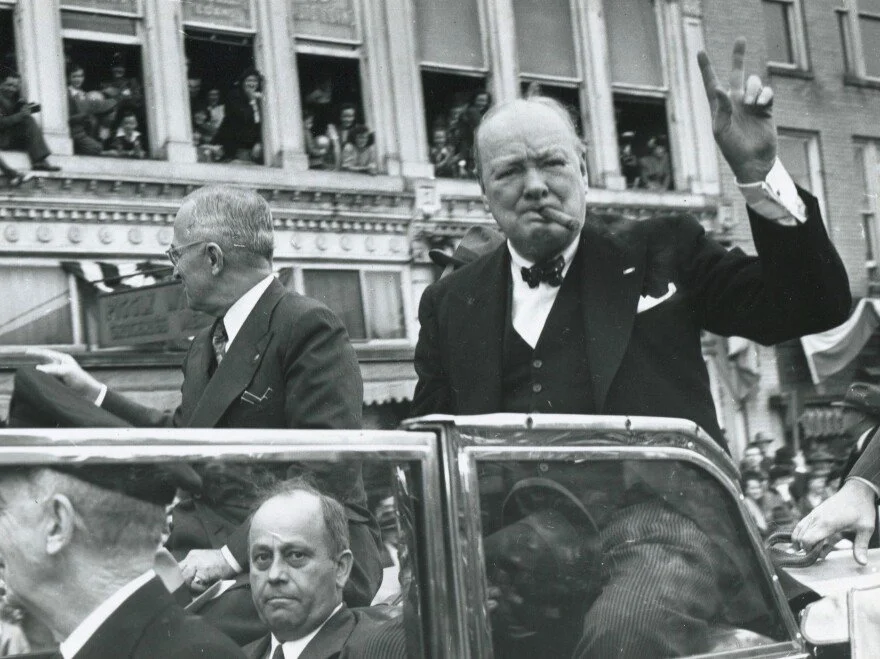
Photo from America’s National Churchill Museum
The visit drew enormous attention. Crowds gathered across Fulton, banners were hung throughout town, and Westminster’s gymnasium was transformed into a lecture hall to accommodate the audience eager to hear Churchill speak.
It was a moment that permanently connected Fulton with world history.
Exploring America’s National Churchill Museum
Today, that connection lives on through America’s National Churchill Museum, the nation’s leading institution dedicated to preserving Churchill’s life and legacy.
Located beneath the reconstructed Church of St. Mary the Virgin, Aldermanbury, the museum offers visitors a comprehensive look at Churchill’s life—from his early years to his leadership during World War II and beyond.
Inside the galleries, visitors encounter:
Personal correspondence and letters written during wartime
Original paintings created by Churchill himself
Photographs, artifacts, and documents spanning his long career
Exhibits exploring the world events that shaped the 20th century
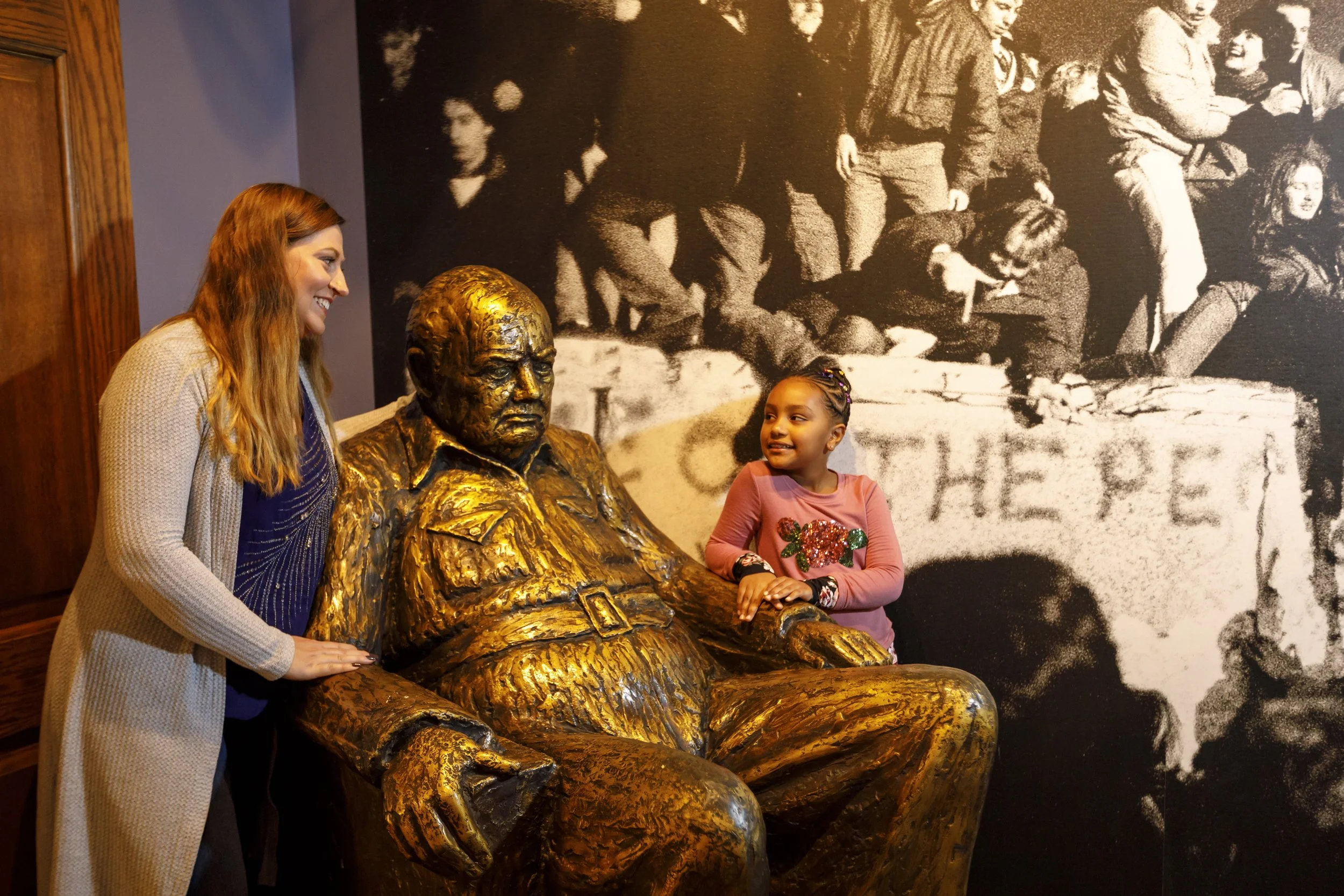
The museum holds one of the largest collections of Churchill-related materials in the world, including archives, personal papers, and artifacts that reveal the man behind the historical figure.
Rather than focusing only on a single speech, the exhibits tell the broader story of Churchill’s life—his leadership, his creativity, and the turbulent century he helped shape.
A Piece of London in the American Midwest
Above the museum stands one of the site’s most remarkable features: the Church of St. Mary the Virgin, Aldermanbury.
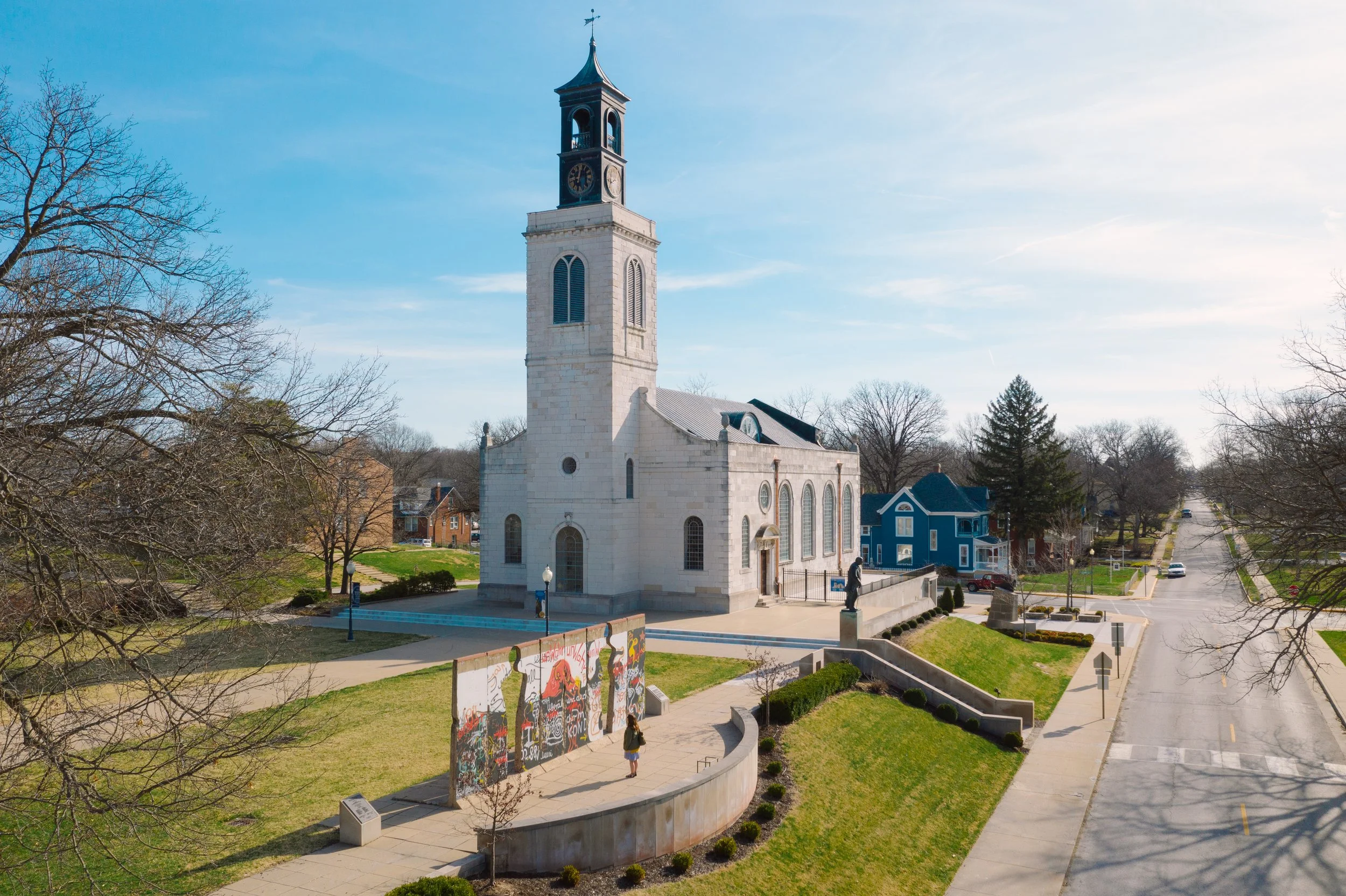
Originally built in London and redesigned by famed architect Sir Christopher Wren after the Great Fire of 1666, the church was heavily damaged during the Blitz in World War II. Decades later, its surviving stones were transported across the Atlantic and carefully reconstructed on the Westminster College campus.
Today, the restored structure serves as both an architectural landmark and a symbolic reminder of the enduring ties between the United States and the United Kingdom.
Outside the church, visitors can also see the Breakthrough sculpture, created from sections of the Berlin Wall and designed by Churchill’s granddaughter, artist Edwina Sandys, commemorating both the speech and the eventual fall of the Berlin Wall.
Reflecting on 80 Years of the “Sinews of Peace”
In 2026, Fulton marks an especially significant milestone: the 80th anniversary of Winston Churchill’s “Sinews of Peace” address.
To commemorate the occasion, America’s National Churchill Museum and Westminster College are hosting a series of programs and events from March 5–7, 2026, exploring the enduring impact of Churchill’s message and its relevance in today’s world.
The commemoration will include special exhibitions, lectures, performances, and guided tours designed to connect visitors with the history of the speech and the global conversations it helped shape.
Eighty years later, the words Churchill spoke in Fulton still resonate. Visitors standing on the same campus where he once addressed the world can reflect on how a small Missouri town became part of one of the defining moments of modern history.
Whether you’re a lifelong history enthusiast or simply curious about the global legacy rooted in Fulton, Churchill’s story remains one of Callaway County’s most defining chapters. And as the 80th anniversary of the “Sinews of Peace” speech approaches, there’s no better time to experience the place where those historic words were first delivered. To view the special programming visit https://www.wcmo.edu/ancm/sinews-of-peace-80.html